The Return of the Prodigal Son: The Stillness After the Storm
Executive Summary
The Embrace
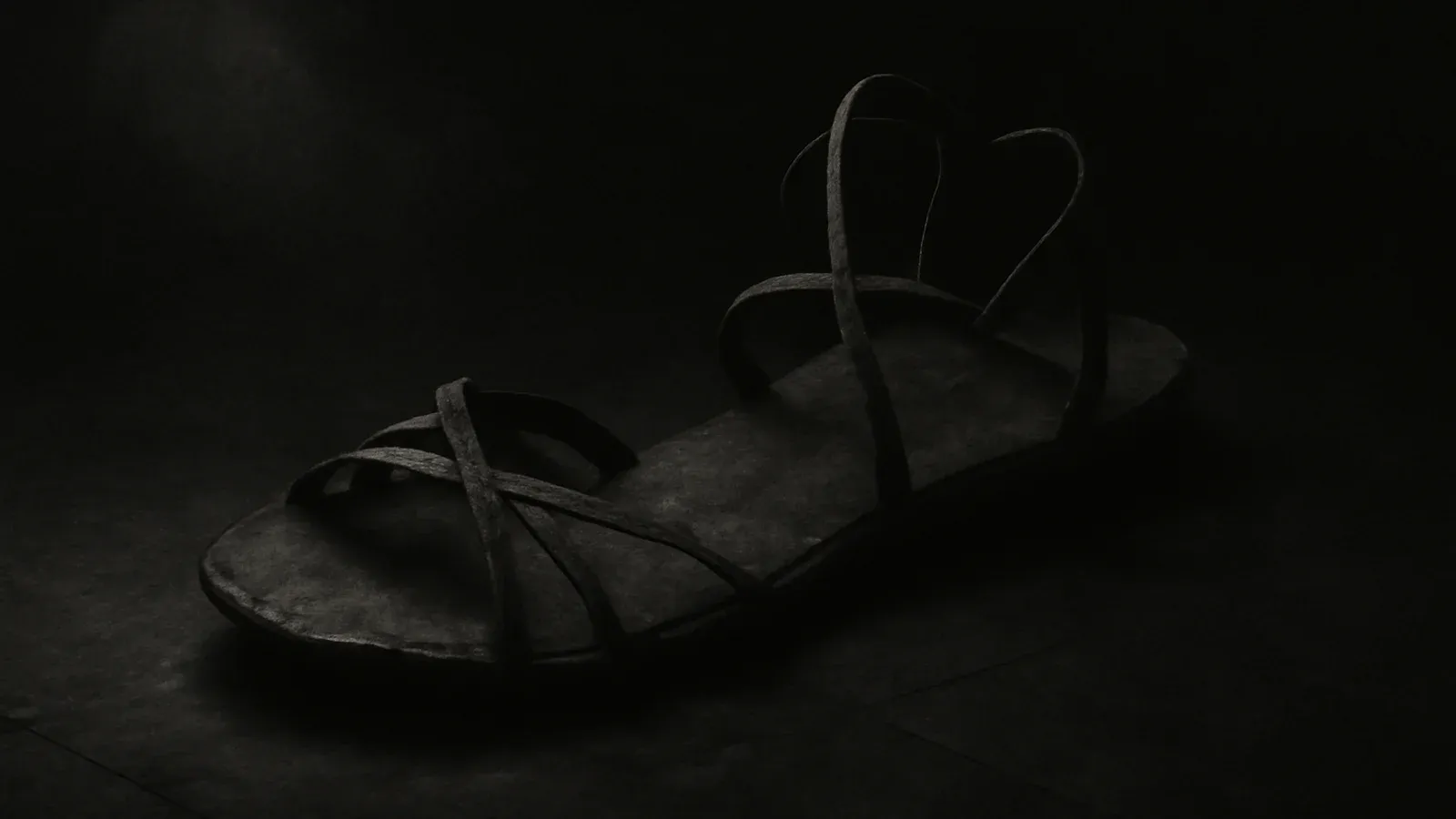
A young man kneels with his back to us, his head shaved like a prisoner’s, pressed against an old man’s chest. His clothes have worn to rags. One sandal has fallen off entirely, and Rembrandt turns the bare foot toward us so we cannot miss it: cracked, scarred, the foot of someone who walked home because there was nothing left to ride. Over him bends the father, half-blind eyes lowered, his red cloak falling open like a tent, and his two hands rest on the son’s back in the gesture the whole painting exists for.
This is The Return of the Prodigal Son, the parable from Luke’s gospel, painted by Rembrandt in his final years — most scholars place it within a few years of his death in 1669. It hangs in the Hermitage in St. Petersburg, acquired for Catherine the Great in 1766, and it is enormous: over two and a half meters tall, the figures nearly life-size. Kenneth Clark thought a person who had stood before it could be forgiven for calling it the greatest picture ever painted. I am not interested in ranking it. I am interested in what it does.
The Two Hands
Look at the father’s hands, because Rembrandt made sure you would: they catch more light than any face in the painting. They do not match. The left hand is broad, sinewed, masculine — a hand that grips. The right is slender, smooth, almost delicate — a hand that rests. Painters of Rembrandt’s caliber do not produce mismatched hands by accident, and the difference has been read for centuries as deliberate: strength and tenderness laid on the same back at once, a father’s hold and a mother’s, judgment’s opposite rendered in anatomy.
Whatever reading you prefer, notice what the hands are not doing. They are not pulling the son up. They are not clutching him. They rest. The forgiveness in this painting has no urgency in it, no relief, no lecture waiting once the hug is over. It is the calmest gesture Rembrandt ever painted, and he had painted storms.
The One Who Stayed
At the right edge stands a tall figure in red, lit almost as strongly as the father, hands folded over his staff, watching. He is usually identified as the elder brother — the one from the parable who stayed, worked, resented, and asked the reasonable question: what about me? Behind him, dimmer figures watch from the shadows; one seated man rubs his chest; a face barely surfaces from the dark background.
I wrote in the piece on chiaroscuro that Rembrandt’s light decides what you see first. Here it does something sharper: it builds a moral geography. The embrace and the watcher are both lit — mercy and its audit, held apart by a meter of darkness neither crosses. Rembrandt does not resolve the elder brother, because the parable does not; Luke ends the story with the father’s appeal hanging in the air, unanswered. The painting keeps it unanswered. The brother’s hands stay folded. The gap stays open. Every viewer decides for themselves which figure they have been.
What the Years Put Into It
Rembrandt had handled this subject before. A 1636 etching shows the same reunion as commotion — the father rushing down steps, the household boiling around the embrace, everything urgent. He was thirty then, recently married, famous, and the best storm-painter in Amsterdam; his Sea of Galilee was three years old.
Between the etching and the canvas came the rest of his life. Saskia died in 1642. The bankruptcy of 1656 took his house and his collection at auction. Hendrickje, who had stood by him through the ruin, died in 1663. His son Titus died in 1668, a year before his father. The man who painted this Return had, by then, done most of his living on the far side of loss — and the painting shows it, not in subject but in surface. The late Rembrandt style is rough, layered, almost carved; the drama that the young man put into waves and rigging, the old man put into paint itself. Nothing in the composition moves. Everything in the texture does.
That is why the picture belongs in this small series I seem to be writing. The 1633 storm is the crisis at full noise, painted by a man who put himself in the boat. This is what he painted when the boat, one way or another, had come in. Centuries later the theologian Henri Nouwen sat in front of it at the Hermitage for days and built a book out of the sitting. It is that kind of painting. It does not ask for your analysis. It asks for your time.
The storm hangs as an empty frame in Boston. The return hangs whole in St. Petersburg. Rembrandt’s first great sea took everything over the side; his last great silence puts one thing back — a son, under two hands that do not match and do not need to.
The storm was a question shouted at a sleeping man. This is the answer, given quietly, forty years late, to whoever kneels long enough to hear it.